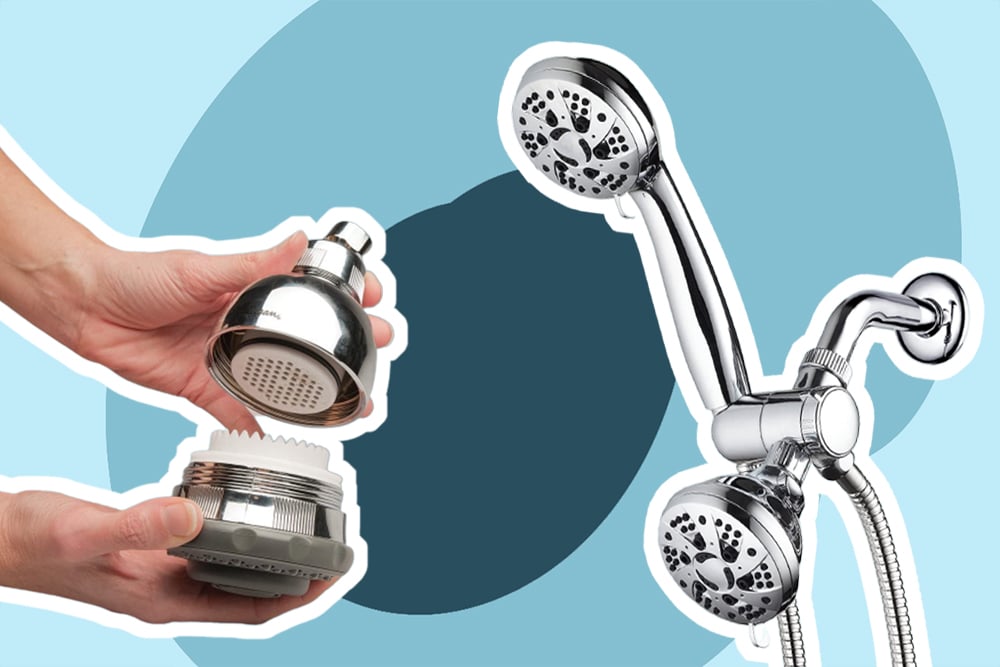


High Sierra FCS-200-CH in the 1.5 GPM version is my best low-flow shower head for most people because it concentrates a modest amount of water into a satisfying, simple spray. Choose Delta 75554CSN if your household wants multiple spray modes, and Niagara N2945CH when handheld reach matters more than a fixed-head look.

A focused 1.5 GPM fixed head that uses a single-nozzle cascade instead of dozens of tiny spray holes.
Five spray settings at 1.75 GPM make this the versatile pick for households that do not want one fixed spray feel.
A 1.5 GPM handheld with a 72-inch hose for rinsing hair, children, pets and the shower itself.
| Product | Best for | Flow | Type | Sprays | Best for |
|---|---|---|---|---|---|
| High Sierra Classic FCS-200-CH, 1.5 GPM | Best Overall | 1.5 | Fixed | Single cascade | Strong-feeling low flow |
| KOHLER Forté K-10327-G-CP | Best Premium Broad Spray | 1.75 | Fixed | Single broad spray | Premium broad coverage |
| Delta 75554CSN 5-Setting Shower Head | Best Multi-Spray | 1.75 | Fixed | 5 settings | Spray variety |
| Speakman Classic S-2253-E15 | Best Adjustable Concentrated Spray | 1.5 | Fixed | Adjustable Anystream | Concentrated adjustable spray |
| Niagara Earth N2912CH 1.25 GPM | Best Ultra-Low Flow | 1.25 | Fixed | 3 settings | Maximum water saving |
| Niagara Earth N2945CH 1.5 GPM Handheld | Best Handheld | 1.5 | Handheld | 3 settings | Flexible rinsing |
Best Overall
This is my default low-flow pick because High Sierra takes a different approach from the usual multi-nozzle face. The single opening creates a cone of larger streams, so the 1.5 GPM limit does not feel like water is being divided among dozens of weak jets. If your complaint about efficient showerheads is that they feel misty, this design is the one I would try first.
The pressure-compensating design is more important than a long list of spray modes. You get one basic shower pattern, but it is designed to remain useful across changing household pressure. The ball joint still lets you aim the head, and the trickle valve is handy when you want to reduce flow temporarily while lathering.
It is also a durable-feeling concept: the core construction is metal and stainless rather than a large decorative plastic face. There is less sprayface to descale, and the single-nozzle layout avoids the forest of tiny rubber outlets found on conventional heads.
Skip it if you like switching between massage, drench and full-body modes. Delta is better for variety, while Niagara N2945CH is the obvious choice when you need a handheld hose. The High Sierra wins by doing one low-flow spray exceptionally simply.
My pick: Pick High Sierra when efficiency and spray feel matter more than multiple modes or a large decorative face.
Best Premium Broad Spray
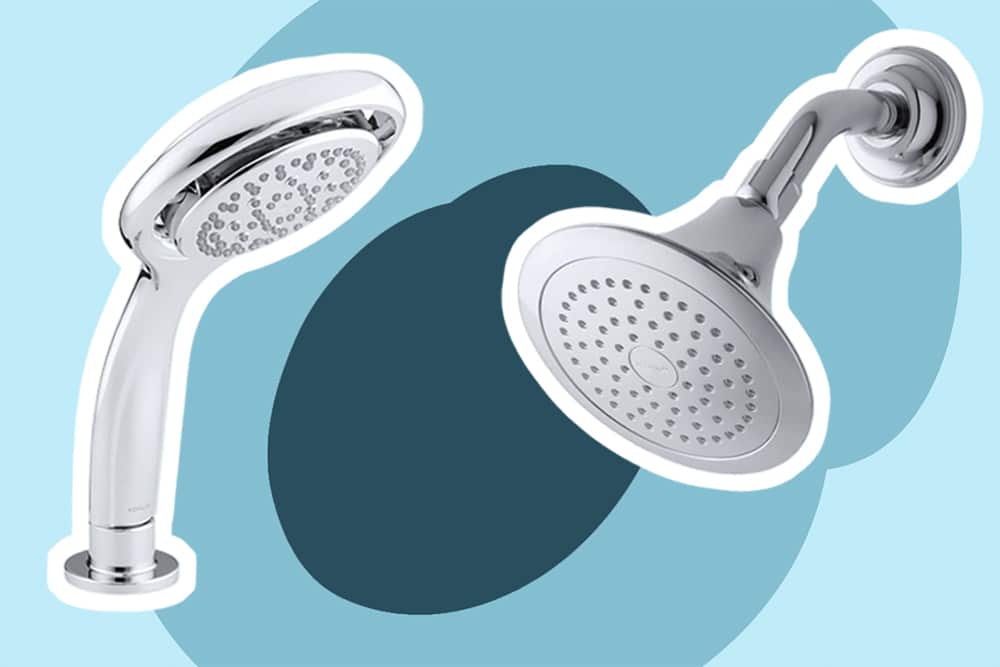
Forté is the better choice for someone who dislikes the concentrated feel of ultra-low-flow heads. The 5.5-inch face spreads water over a larger area, while Katalyst mixes air into the stream to create larger droplets. The result is a more conventional shower experience without returning to a 2.5 GPM flow rate.
I would choose it over High Sierra when broad coverage and finish quality matter more than absolute water savings. At 1.75 GPM, a ten-minute shower uses 17.5 gallons; that is still 7.5 gallons less than a 2.5 GPM head under the same ten-minute example.
The tradeoff is simplicity. It has one spray, so the premium goes toward the spray engine, finish and large face rather than massage modes. Delta 75554CSN is the better buy for someone who changes spray patterns regularly.
Installation is conventional, but remember that the shower arm and flange are separate. If your existing arm is in good shape, that is usually fine. If you are renovating the whole shower, include those parts in the project rather than treating the head as a complete assembly.
My pick: Choose Forté if you want water savings without giving up the broad, polished feel of a traditional premium showerhead.
Best Multi-Spray
Delta is the model I would buy for a shared bathroom because one person can use a full-body spray while another prefers massage or a softer drench. The pause setting is also practical for shaving or lathering, even though it should not be confused with a shutoff valve.
The Touch-Clean rubber outlets are useful in hard-water areas because mineral deposits can be rubbed from the sprayface instead of attacking a metal plate with harsh tools. SpotShield is also a sensible finish for a frequently handled bathroom fixture because it is intended to resist water spots and fingerprints.
There is one fit detail that deserves attention: this head does not give you the same aiming freedom as a swiveling ball-joint model. If your shower arm exits the wall at an awkward angle, High Sierra or another adjustable head may fit the user better.
Do not buy this with a plan to pull out the flow restrictor. The 1.75 GPM system is part of the product design, and changing it can damage the fixture, void warranty coverage and conflict with local flow limits. If 1.75 GPM feels too low for your household, pick the correct legal model rather than modifying one.
My pick: Pick Delta when several people share the shower and spray flexibility is more valuable than squeezing water use down to 1.25–1.5 GPM.
Best Adjustable Concentrated Spray
Speakman is the best alternative to High Sierra if you want a traditional compact showerhead but still want to change the spray character. Its four plungers feed 32 spray channels, and the Anystream handle lets you move from a more intense pattern toward broader coverage without a giant selector dial.
The 1.5 GPM flow rate hits the sweet spot for meaningful water savings. In a ten-minute shower it uses 15 gallons, 10 gallons less than a 2.5 GPM head over the same time. That arithmetic does not guarantee the same subjective pressure, but it shows why 1.5 GPM is a useful target when you want a real reduction rather than a small efficiency step.
I would choose Speakman over Delta for a single user who values a focused spray more than five named modes. Delta is more versatile for a family; Speakman is more direct and mechanically simple.
The compact head also fits older showers where a large modern face would look out of place. If you want a broad rain-style spray, this is the wrong design; KOHLER Forté spreads the water across a much larger face.
My pick: Choose Speakman when you want a compact, focused 1.5 GPM spray with meaningful adjustment rather than a large multi-mode face.
Best Ultra-Low Flow
Niagara is the pick for someone who wants to push water use lower than the usual WaterSense 1.75 GPM target. At 1.25 GPM, a ten-minute shower uses 12.5 gallons—half the water of a 2.5 GPM head in the same ten-minute example.
That saving is meaningful, but I would not recommend 1.25 GPM blindly. A household that already struggles with weak supply pressure may prefer a carefully designed 1.5 or 1.75 GPM head. The Earth line uses pressure compensation to make low flow more consistent, but personal spray preference still matters.
Three functions give it more flexibility than the single-spray High Sierra, while the large-diameter spray keeps it from feeling like a tiny utility nozzle. The non-removable flow compensator is also the right approach for a product whose point is predictable efficiency.
Choose it if water conservation is the top priority. If shower feel comes first and you only want a moderate reduction, KOHLER Forté at 1.75 GPM is the safer compromise.
My pick: Pick Niagara N2912CH when you deliberately want 1.25 GPM, not simply because the smallest flow number looks best on paper.
Best Handheld
The N2945CH is the easiest recommendation when a fixed head is the real limitation. A 72-inch hose changes what the shower can do: rinsing long hair, washing a child, cleaning the enclosure and reaching a seated bather are all easier than with a wall-only spray.
At 1.5 GPM it still delivers serious water savings without dropping to the 1.25 GPM extreme. The three-function head adds enough choice for normal showering without turning the handle into a complicated multi-control device.
I would take this over the fixed N2912CH for any household that frequently cleans the shower by hand or needs directed rinsing. I would choose the fixed model instead if the shower is small and the hose would become clutter.
The backflow preventer is an important part of the handheld assembly, and the hose deserves occasional inspection for kinks or wear. Handheld convenience comes with more connections than a fixed head, so there is simply more hardware to maintain.
My pick: Choose the N2945CH when the ability to direct the spray is more valuable than achieving the absolute lowest flow rate.
The math is straightforward. A ten-minute shower at 2.5 GPM uses 25 gallons. At 1.75 GPM it uses 17.5 gallons, at 1.5 GPM it uses 15 gallons, and at 1.25 GPM it uses 12.5 gallons. Those are flow-rate examples, not promises about your bill, because actual shower time and local water/energy costs vary.
The meaningful choice is how far you want to push efficiency. I view 1.75 GPM as the easy compromise for buyers who want a familiar broad spray. A well-designed 1.5 GPM head is the sweet spot for stronger savings without going to the extreme. I reserve 1.25 GPM for buyers who explicitly want maximum reduction and are comfortable with a leaner flow.
Longer showers can erase the savings of a lower-flow head. A comfortable 1.5 GPM shower that you finish in ten minutes can use less water than a 1.25 GPM shower that runs much longer because rinsing feels slow. Choose the spray you can live with, not the smallest number in isolation.
Pressure and flow are different. A showerhead cannot create water that is not available from the plumbing, but it can shape a smaller flow into larger droplets, concentrated jets or a pressure-compensated spray. That is why High Sierra, KOHLER Forté and Speakman can feel very different even when their GPM numbers are close.
Large rain-style faces spread the same flow across a wider area. That can feel luxurious but softer. Compact heads concentrate water and often feel more energetic. Air-induction heads such as the KOHLER Forté enlarge droplets to make a modest flow feel fuller. Decide which sensation you prefer before choosing the product.
Do not plan on removing a flow restrictor to make an efficient head stronger. Restrictors are part of the designed flow system, and altering one can damage the product, void warranty coverage or put the fixture outside local flow limits. If you want more flow, buy an appropriate legal configuration instead.
A fixed head is cleaner, simpler and has fewer connections to maintain. High Sierra, KOHLER, Delta, Speakman and Niagara N2912CH all suit a conventional shower where the head stays on the wall.
A handheld changes the job completely. The Niagara N2945CH gives you a 72-inch hose, making it easier to rinse long hair, bathe children or pets, clean the enclosure and direct water while seated. That utility often matters more than another spray mode.
Choose the handheld only if the hose will be useful. In a tiny shower, extra hose can feel cluttered. In a family bathroom or accessible shower plan, the reach can be the feature that matters most.
For most households I would start at 1.5–1.75 GPM. Move to 1.25 GPM when maximum conservation is the priority and you are comfortable with a leaner flow. Always use a configuration allowed in your location.
Not automatically. WaterSense addresses efficiency and performance criteria, not a guarantee that every user will prefer the spray. Nozzle and droplet design still determine how the shower feels.
I would not. The restrictor is part of the product’s designed flow system, and removing it can damage the head, void warranty coverage and create code or efficiency issues.
Not necessarily, but it is a deliberate choice. If you already dislike low-flow showers, start with a well-designed 1.5 or 1.75 GPM model rather than buying the lowest number and regretting it.
Not if both are rated for the same flow. The difference is how you use them. A handheld can even make rinsing quicker because you can direct the water exactly where it is needed.