

A good shower grab bar is not just a piece of metal with a high weight rating. The bar, fasteners, wall structure, placement, and grip all have to work together. For most bathrooms, a permanently mounted 24-inch bar is the most useful starting point, and the Moen 8724 is our default pick because it combines a 1.25-inch grip, stainless-steel construction, concealed screws, and a manufacturer-stated 500-pound support rating when installed as directed.

A straightforward 24-inch permanent bar with a 1.25-inch diameter, concealed screws, and a 500-pound manufacturer rating.

A more finished-looking 24-inch bar with concealed mounting, included hardware, 1.25-inch diameter, and a 500-pound stated rating.
A 30-inch flip-up bar for locations where support is needed only part of the time and floor space must stay open.
| Product | Best for | Length | Grip / diameter | Stated support | Important installation point |
|---|---|---|---|---|---|
| Moen 8724 | Most bathrooms | 24 in. | 1.25 in., smooth stainless | Up to 500 lb | SecureMount design; install only as Moen specifies |
| Moen LR8724P | Textured grip | 24 in. | 1.25 in., peened texture | Up to 500 lb | SecureMount flange; verify structure or approved anchor |
| Delta 41624 | Decorative look | 24 in. | 1.25 in., smooth | Up to 500 lb | Hardware and retrievable wall anchor included |
| Moen R8960FD | Fold-away support | 30 in. | 1.25 in. | Up to 300 lb | Needs strong, correctly located mounting structure |
| HealthCraft GB-24-SK | Knurled grip / mounting flexibility | 24 in. | 1.25 in., knurled | Up to 500 lb | 9-hole flange; hollow-wall anchors are separate if needed |
| HealthCraft INVISIA Accent Bar | Premium design | 24 in. | 1.25 in., curved profile | Up to 500 lb | Designed for wood studs on 16-in. centers |
The Moen 8724 is the easiest pick to recommend when you want a conventional permanent bar without paying extra for decorative curves or moving mechanisms. Moen lists a 24-inch rail, 1.25-inch diameter, stainless-steel construction, corrosion resistance, and support up to 500 pounds. The concealed screw covers also make it look more finished than an exposed-fastener utility bar.
The key reason it wins overall is its balance. Twenty-four inches gives useful reach in many shower layouts without becoming difficult to position, and the 1.25-inch diameter is easier to wrap a hand around than thicker rails for many users. Moen also says the SecureMount design lets the bar be secured at different angles, which can help an installer align a useful hand position with safe structure.
The tradeoff is grip texture. The 8724 is smooth stainless steel. If wet-hand grip is your top priority, the peened LR8724P below is the better version. If appearance matters more, Delta’s 41624 or HealthCraft’s INVISIA Accent Bar looks less clinical.

The LR8724P takes the basic Moen 24-inch format and adds the feature that matters most when hands are wet: a peened, textured surface. Moen describes the finish as textured and slip-resistant, while retaining the same 1.25-inch diameter, stainless-steel construction, SecureMount design, and up-to-500-pound support rating.
That makes it the better choice for someone who does not feel secure on a smooth polished rail. It also keeps the installation flexible because Moen’s flange design provides multiple fastening positions. That flexibility does not mean you can fasten it to any surface; the support behind the wall and the approved mounting method still control how secure the finished installation is.
The compromise is appearance and feel. A peened rail looks more utilitarian, and some users may prefer a smooth surface. Moen’s own online store may also show changing availability, so this pick is here for the grip design rather than because it is always the easiest one to buy.
Delta’s 41624 is for bathrooms where a standard straight safety bar looks too clinical. The curved traditional mounting ends hide the fasteners and visually match ordinary bath hardware, yet Delta still rates the bar for up to 500 pounds and lists it as ADA compliant.
It is also unusually complete. Delta lists a 1.25-inch bar diameter, 3-inch flanges, 1.5-inch wall clearance, concealed mounting, included hardware, and a retrievable wall anchor. Delta’s product Q&A says the bar can be installed inside a shower and stresses secure attachment to appropriate structure or an approved wall anchor.
The surface itself is smooth rather than textured, so choose the Moen LR8724P or HealthCraft GB-24-SK if a more tactile grip matters more than appearance. Also remember that an ADA-labeled product does not make the entire bathroom ADA compliant; placement, clearances, surrounding fixtures, and the installed structure all matter.

The R8960FD solves a different problem from the straight bars above: it gives you a long support rail that can move out of the way. That is useful beside a toilet, transfer area, or other location where a permanently projecting rail would interfere with access.
Moen lists a 30-inch length, 1.25-inch diameter, stainless-steel construction, corrosion resistance, a 300-pound support rating, and ADA compliance. The folding action makes it more versatile, but it also makes placement and structural mounting more important. A moving rail creates leverage at the wall, so this is a product where installation quality is inseparable from product quality.
If you simply need a handhold inside a typical shower, a fixed 24-inch bar is simpler and usually easier to locate. Choose this only when the ability to fold the rail away solves a real space or transfer problem.
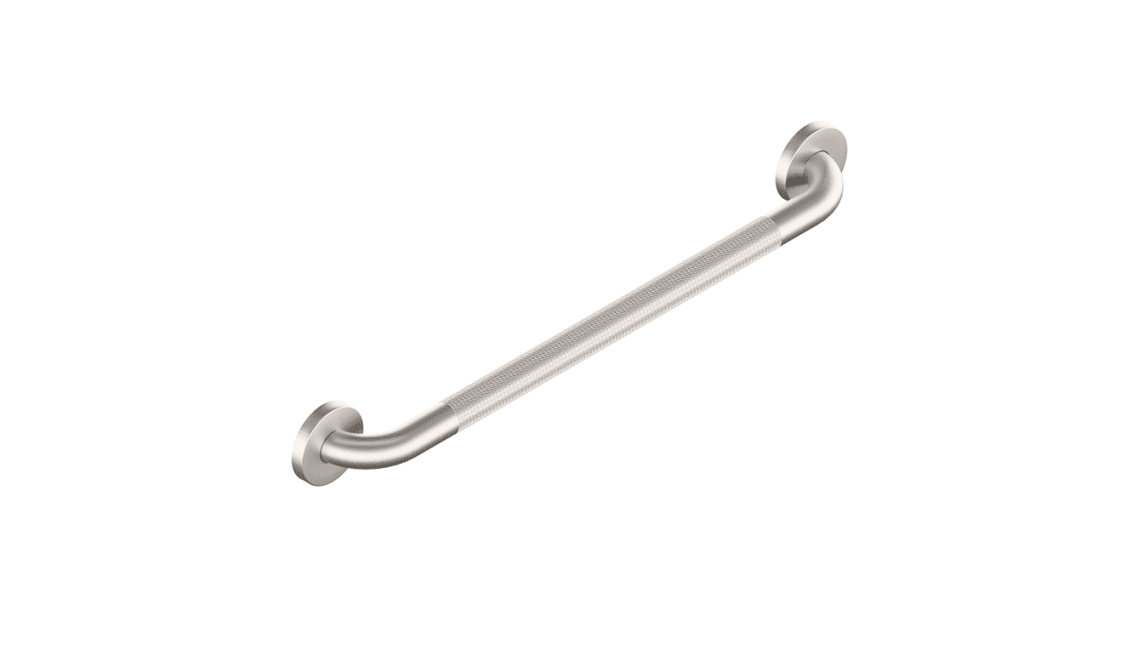
The HealthCraft GB-24-SK is the best fit here if you want both a heavily textured hand surface and more flexibility in where the mounting screws can land. HealthCraft uses a 9-hole flange rather than a simple 3-hole pattern, which gives the installer more fastening positions. The company says the 24-inch bar can be mounted horizontally, vertically, or diagonally.
The knurled surface is the other reason to choose it. It is more tactile than a smooth polished rail and more aggressive than the subtle texture of some peened bars. HealthCraft lists stainless-steel construction, a 1.25-inch diameter, a 500-pound weight capacity, and a limited lifetime warranty.
Do not confuse mounting flexibility with universal compatibility. HealthCraft explicitly sells its Easy Mount hollow-wall anchor separately, and its own guidance says structural studs or blocking are best where possible. The substrate, wall cavity, anchor model, fasteners, and installation method must all match the instructions.
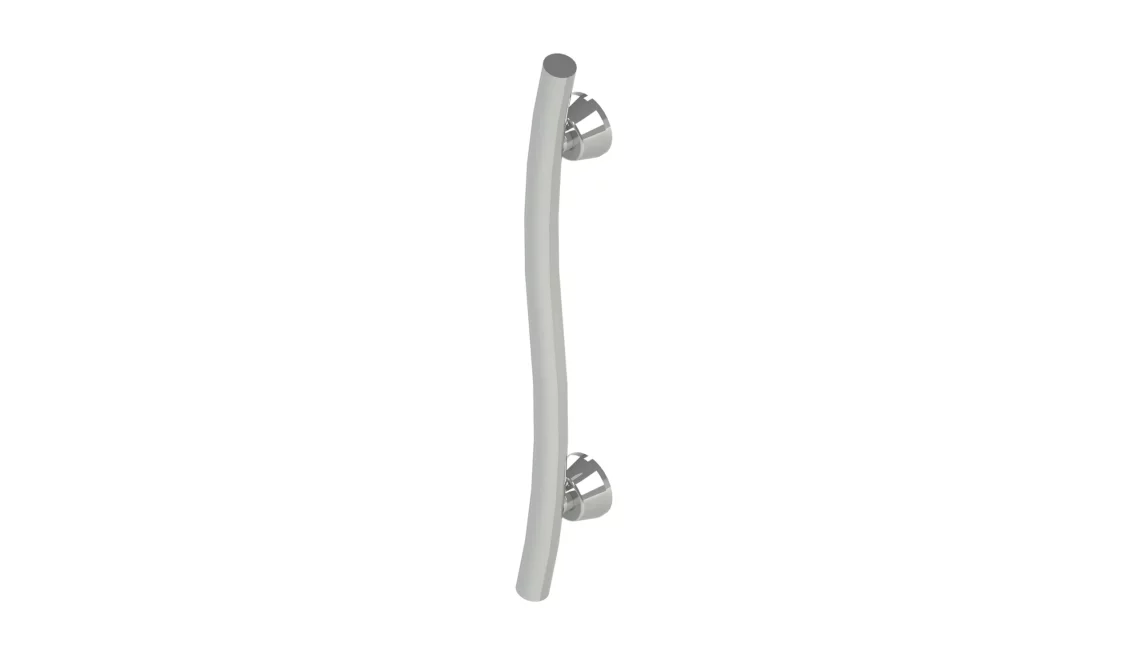
The INVISIA Accent Bar is what you buy when visible accessibility hardware is stopping you from adding support where it is needed. Instead of a straight institutional-looking rail, HealthCraft uses a curved 24-inch profile designed to blend into a finished bathroom. It is available in brushed, chrome, matte black, and oil-rubbed bronze finishes.
The design does not remove the structural specifications. HealthCraft lists stainless-steel construction, a 1.25-inch rail diameter, 1.5-inch wall clearance, a 500-pound weight capacity, and the ability to mount vertically, horizontally, or diagonally. The important catch is that HealthCraft specifies wood studs on 16-inch centers for this model.
That makes it less flexible for a retrofit than the Easy Mount bar above. Measure and locate the studs first. If the wall layout works, though, this is the strongest option in the guide for someone who wants the bar to read as part of the bathroom design rather than medical equipment.
Do not choose the length first. Watch where the user reaches when entering the shower, turning, standing up, or stepping out. A well-placed shorter bar can be more useful than a longer one mounted where the hand does not naturally go. National fall-prevention guidance recommends grab bars inside and outside the tub or shower, but the exact home layout and user needs still matter.
The bar’s advertised weight capacity is only one part of the system. Fasteners, anchors, blocking or studs, the wall assembly, and the bar itself all have to carry the load. For accessibility standards that apply to covered facilities, the U.S. Access Board specifies structural strength at the grab bar, fastener, mounting device, and supporting structure—not just at the metal rail.
Smooth stainless steel is easier to clean and looks less industrial. Peened and knurled finishes provide more texture when hands are wet. More texture is not automatically better for every user, however; someone with sensitive skin or limited hand strength may prefer a smaller-diameter smooth rail that is easier to close the hand around.
Suction handles can be removable and convenient, but they are not the same installation class as a bar mechanically attached to appropriate structure. For a primary fall-prevention handhold, this guide prioritizes permanently mounted grab bars. If a removable suction aid is used for balance or orientation, follow its manufacturer limits and never assume it can take the same loads as a structural bar.
The Americans with Disabilities Act standards cover more than the product label: bar diameter, wall clearance, placement, surrounding clearances, structural strength, and the bathing-room layout can all matter in facilities where the standards apply. For a private home, use those dimensions as useful reference points only when they fit the person and project; local requirements and individualized mobility needs may differ.
There is no universal best length. Twenty-four inches is a versatile starting point because it provides meaningful reach without becoming difficult to place, but the correct size depends on where secure structure exists and where the user actually needs support. Measure the available wall and mark the natural hand positions before buying.
It depends on the job. A vertical bar can help at an entry point, a horizontal bar can provide continuous support along a wall, and a diagonal bar can offer changing hand heights. Follow the product’s permitted orientations and any accessibility requirements that apply to the installation.
Tile is only the finished surface. The important question is what structure or approved anchoring system is behind it. Drilling also has to preserve the waterproof assembly. If you cannot confidently identify the wall construction and the manufacturer’s approved installation method, use a qualified installer.
No. They should not be treated as equivalent replacements for a properly anchored structural grab bar. Suction can depend on surface condition, seal quality, placement, and ongoing inspection. For dependable body support, choose a grab bar installed into appropriate structure or with the exact approved anchor system specified by the manufacturer.
Often, yes. Support may be needed at different stages: entering, standing or turning inside the shower, and stepping out. If sitting during bathing is part of the plan, also consider how a grab bar works with a properly sized shower chair or transfer bench rather than treating either product as a complete solution by itself.